
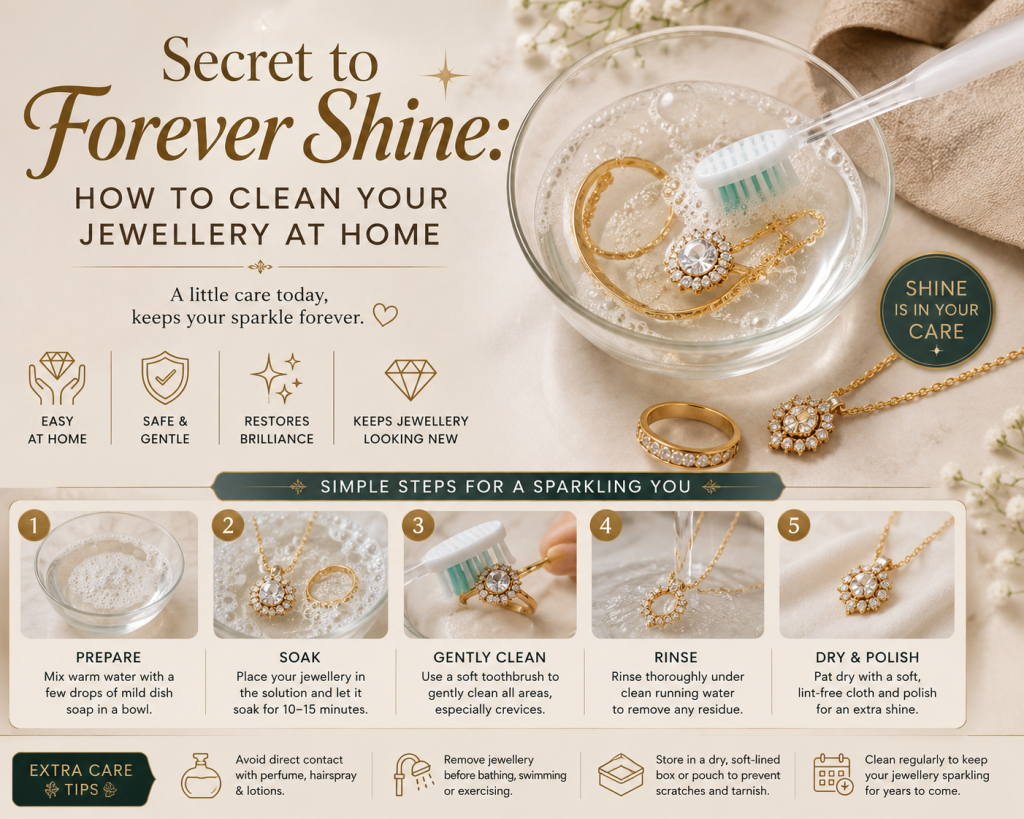
We have all been there: you pull out your favourite necklace for a special occasion, only to find it looking a bit dull or tired. Whether it is a daily-wear piece or a statement set from Makbe, every piece of jewellery needs a little “TLC” (Tender Loving Care) to keep its sparkle alive.
The good news? You don’t need expensive chemicals or a professional jeweller to restore that glow. Here is the Makbe guide to keeping your collection shining forever.We have all been there. You reach into your jewelry box to pull out your favorite gemstone ring or that classic silver chain, only to find it looking a little dull, cloudy, or noticeably tarnished. Over time, everyday factors like skin oils, hand creams, perfumes, sweat, and environmental pollution coat your jewelry, stealing its natural brilliance.
The good news? You don’t need an expensive trip to a professional jeweler or harsh industrial chemicals to restore that original luster. In fact, most of what you need to bring back that “forever shine” is already sitting in your kitchen or bathroom cabinet.
Here is the definitive guide to safely and effectively cleaning your jewelry at home without causing scratches or damage.
1. The Gentle “Warm Water” Bath
If you want to clean your everyday gold bands, platinum settings, or diamond studs (including lab-grown diamonds), this simple method is highly effective.
What You Need:
- A bowl of warm (not boiling) water
- A few drops of mild, unscented dishwashing soap
- A new, ultra-soft bristled toothbrush (baby toothbrushes work best)
- A lint-free microfiber cloth
The Steps:
The Dry: Pat dry completely with a clean microfiber cloth. Never use paper towels or tissues, as their fibers can leave tiny microscopic scratches on the metal.
The Soak: Mix a few drops of dish soap into the warm water. Drop your jewelry in and let it soak for 15 to 20 minutes. This loosens built-up oils and dirt trapped under gemstone prongs.
The Gentle Brush: Take your soft toothbrush and gently brush the piece. Pay close attention to the underside of the stones and the crevices around the setting where lotion builds up.
The Rinse: Rinse thoroughly under warm running water. (Pro-tip: Always plug your sink drain first!)
2. The “Microfiber” Magic
After washing, avoid using tissues or paper towels. These can actually leave tiny scratches on polished surfaces.
The Secret: Use a soft microfiber cloth (like the one you use for your laptop screen or glasses). Pat the jewellery dry and give it a gentle buff to bring back the mirror-like shine.When it comes to drying and buffing your jewelry, your choice of fabric makes all the difference. Many people make the mistake of grabbing a paper towel, a tissue, or a rough bath towel to wipe down their pieces.
Why Microfiber Wins: A clean, lint-free microfiber cloth behaves like a magnet for residual skin oils and microscopic dust. It distributes pressure evenly across the metal without snagging on delicate prongs or scraping away gold-plated surfaces. After cleaning your jewelry, use a specialized jewelry polishing microfiber cloth to buff the metal in circular motions to reveal its deepest shine.
The Hidden Danger: Paper towels and tissues are made from wood pulp, meaning they contain tiny, abrasive fibers. Rubbing your jewelry with them can leave micro-scratches on polished gold, sterling silver, or soft gemstones over time.
3. Avoiding the “Chemical Trap”
As a business that cares about quality, we want to warn you: Keep your jewellery away from perfumes, lotions, and sanitizers.t can be incredibly tempting to buy commercial jewelry “dips” or use aggressive internet hacks like toothpaste, vinegar, or heavy bleach to clean stubborn tarnish. However, these quick fixes often act as a chemical trap that can permanently ruin your luxury items.
The Danger of Dips: Liquid chemical dips work by eating away the top microscopic layer of tarnish. If you leave a silver or gold-plated piece in a dip for just a few seconds too long, it can strip away the precious metal plating entirely, pit the surface, or damage the internal structure of porous gems like pearls and opals. Stick to mild dish soap and water—patience over pressure is always the safer route
Toothpaste is Abrasive: While it makes your teeth shine, toothpaste contains abrasive particles that can dull the smooth, mirror-like finish of gold and silver.
- The chemicals in these products can react with the plating over time.
- The Rule: Your jewellery should be the last thing you put on in the morning and the first thing you take off at night.
4. Smart Storage (The Digital Age Way)
Don’t just throw your necklaces into a drawer where they can tangle and scratch each other.
The Solution: Store each piece in the individual Makbe pouch or a zip-lock bag. This prevents moisture from reaching the metal, which is the secret to “Anti-Tarnish” longevity.Keeping your jewelry clean isn’t just about how you wash it—it’s about how you store it. In the modern digital era, smart storage means utilizing high-performance materials designed to stop damage before it starts.
Separation Architecture: Ensure that hard stones like diamonds are kept completely separate from soft baroque pearls and fine metal chains. A diamond can easily scratch gold or slice open a delicate pearl surface if tossed into the same compartment
Anti-Tarnish Modular Pouches: Swap out massive, open-air jewelry trays for specialized, airtight modular pouches lined with anti-tarnish fabric. These fabrics are treated to absorb atmospheric sulfur before it can touch your silver or gold-filled jewelry.
Silica Gel Packets: Never throw away the little silica gel packets that come in your online shopping deliveries or shoe boxes. Pop them directly into your jewelry organizer. They act as passive dehumidifiers, drawing excess moisture out of the air to prevent oxidation, especially in humid climates.
5.Understanding Materials: When NOT to Clean at Home
Before you start soaking your entire collection, double-check your jewelry vocabulary to avoid a major mistake:
Gold Plated / Vermeil: These pieces feature a very thin layer of gold over silver or base metals. Intense scrubbing with a toothbrush or harsh polishing cloths will prematurely wear away the gold layer, exposing the metal underneath. Clean these only by wiping very gently with a damp cloth.
Anti-Tarnish Modern Hardware: High-quality daily jewelry made of treated stainless steel or anti-tarnish metals requires very little maintenance. A quick wipe-down with water and a soft cloth is usually more than enough to maintain its sleek finish.
Why Quality Matters
At Makbe, we use high-grade materials that are built to last. But even the best metals need a little love. By following these simple steps, you ensure that your investment stays as beautiful as the day you unboxed it.
“Chamak wahi, jo hamesha nayi lage.” (Shine is that which always feels new.)